









New liveries for five 2026 Kawasaki Z models released
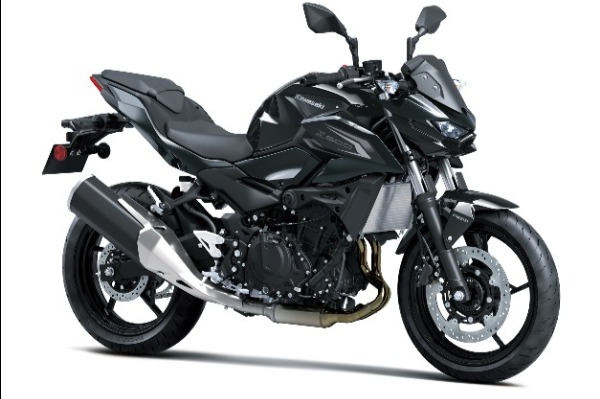
Z500
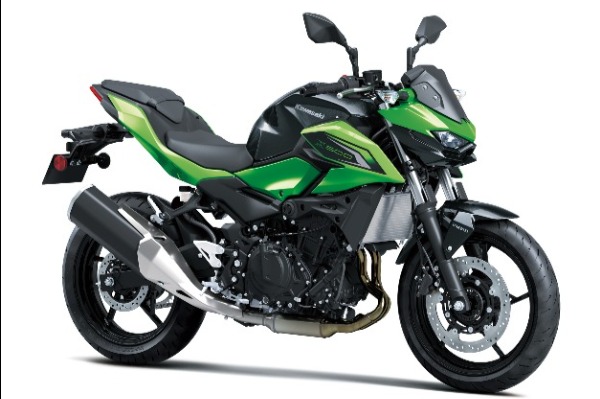
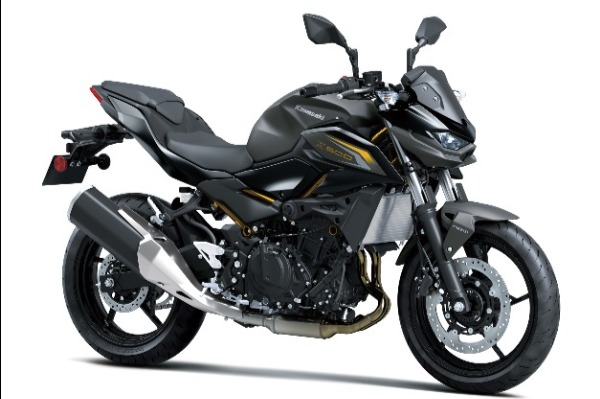
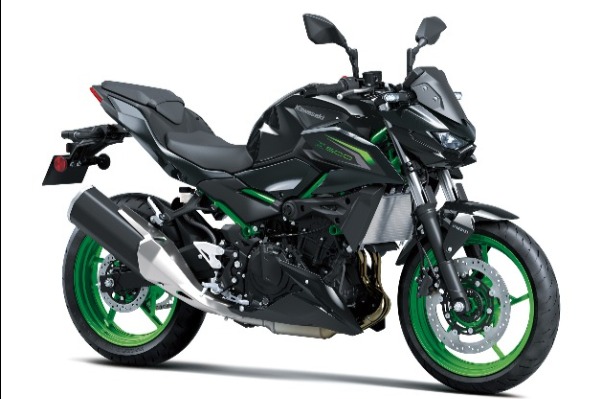
Z500 SE
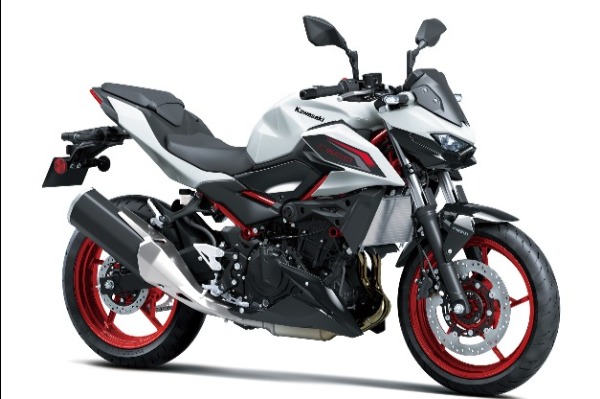
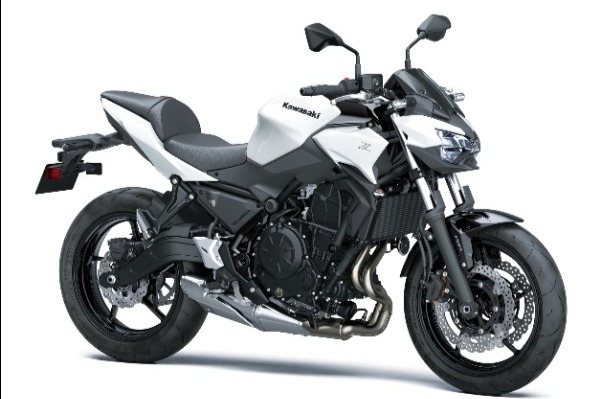
Z650
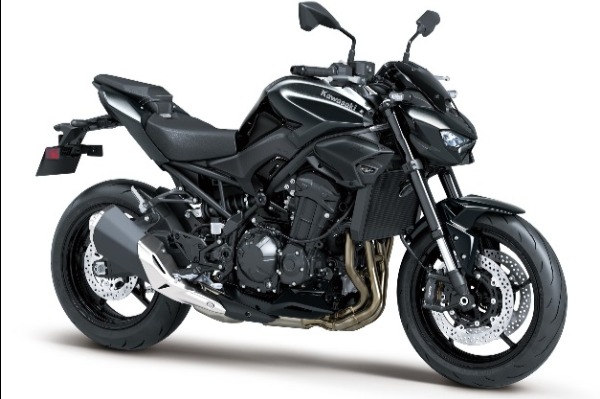
Z900
Z900 SE
Forming part of the very essence of Kawasaki’s naked segment motorcycle heritage, the Z family of machines is as popular as ever, achieving a global following thanks to its adherence to a fun to ride ethos coupled with Kawasaki’s landmark engineering and unique contemporary Sugomi styling.
Stretching an enviable lineage way back to the Z1 Super Four of the early 1970’s, Z speaks to riders on many levels and Kawasaki’s Z offering for 2026 is as impressive as ever. Five machines with new liveries are now ready to be unveiled and among these are refreshed liveries on entry level A2 compliant models, a mid-capacity stalwart plus hard edged yet rider friendly models in the upper capacity classes.
From launch, the A2 licence friendly Z500 quickly garnered a reputation for lively and controllable performance thanks to an all new twin-cylinder, water-cooled engine platform combined with an assist and slipper clutch and Smartphone connectivity mated to a forgiving chassis well suited to newbies and experienced riders alike. Infused with Kawasaki’s unique Sugomi spirit, the Z500 and sibling Z500 SE will be available in the 2026 motorcycle range in a combined total of five new colour ways; Ebony/Metallic Carbon Gray, Candy Lime Green/Metallic Carbon Gray and Metallic Matte Graphenesteel Gray/Metallic Spark Black for the Z500 and Ebony/Metallic Carbon Gray plus Pearl blizzard White/Ebony for the SE version.
The Z500’s larger stable mate, the Z650 enjoys a new colour option for 2026 while keeping to its tried and trusted combination of 649cc engine, full LED lighting, KTRC traction control and colour TFT plus trellis type chassis sporting a distinctive headlight cowl evoking the 2003 rebirth of the Z family. With a well-earned reputation for performance and durability, the compact twin cylinder engine – complete with cassette type gearbox – is equally at home on city streets as mountain passes and comes in Pearl Blizzard White.
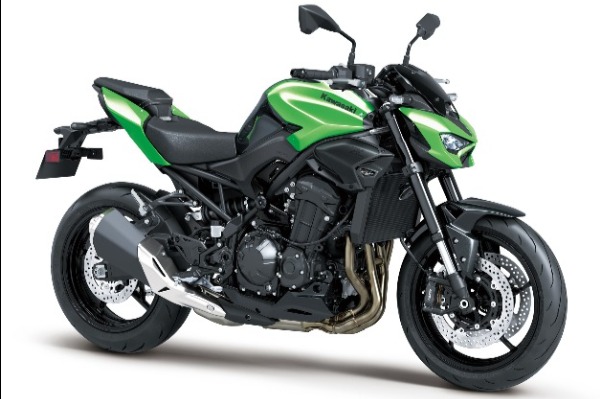
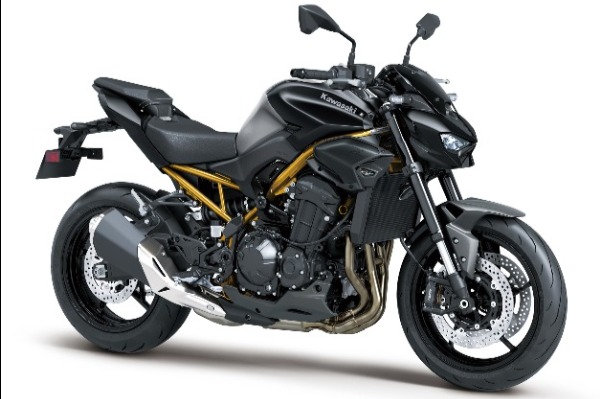
For many the ideal combination of engine size, willing performance and classic Sugomi style, two Z900 machines for 2026 share four new colour options between them. The Z900 which boasts electronic cruise control, an inertia measurement unit (IMU) and Rideology voice command functionality will appear in Kawasaki dealerships in three colour options, those being Ebony/Metallic Carbon Gray, Candy Lime Green/Metallic Carbon Gray and Metallic Matte Graphenesteel Gray/Metallic Spark Black for the Z900.
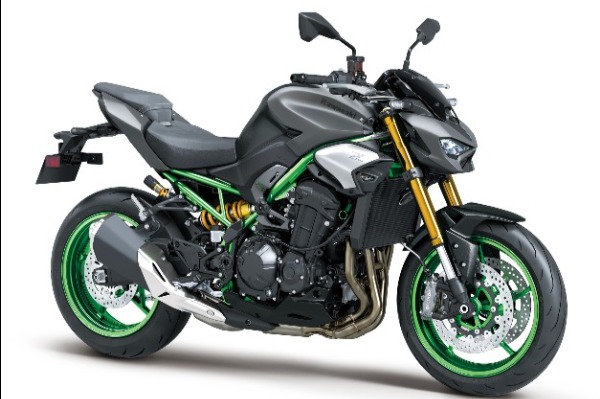
The Special Edition or SE model of Z900 boasts upgraded brakes and suspension plus a headlamp cowl USB-C socket. It now comes in a new colour option for the coming season of Metallic Matte Graphenesteel Gray / Metallic Matte Carbon Gray.
Coming into stock at Kawasaki dealers across Europe soon – along with other incoming 2026 model year machines – the vast array of Z options shows just how seriously Kawasaki takes the category and how determined the company is to offer the widest possible choice to keep the Good Times rolling.
Pricing and availability as follows:
- Z500 – Available from November, price TBC
- Z500 SE – Available from November, price TBC
- Z650 – Available from October, price TBC
- Z900 – Available from October, price TBC
- Z900 SE – Available from late October, price TBC
The GSX-R1000R returns
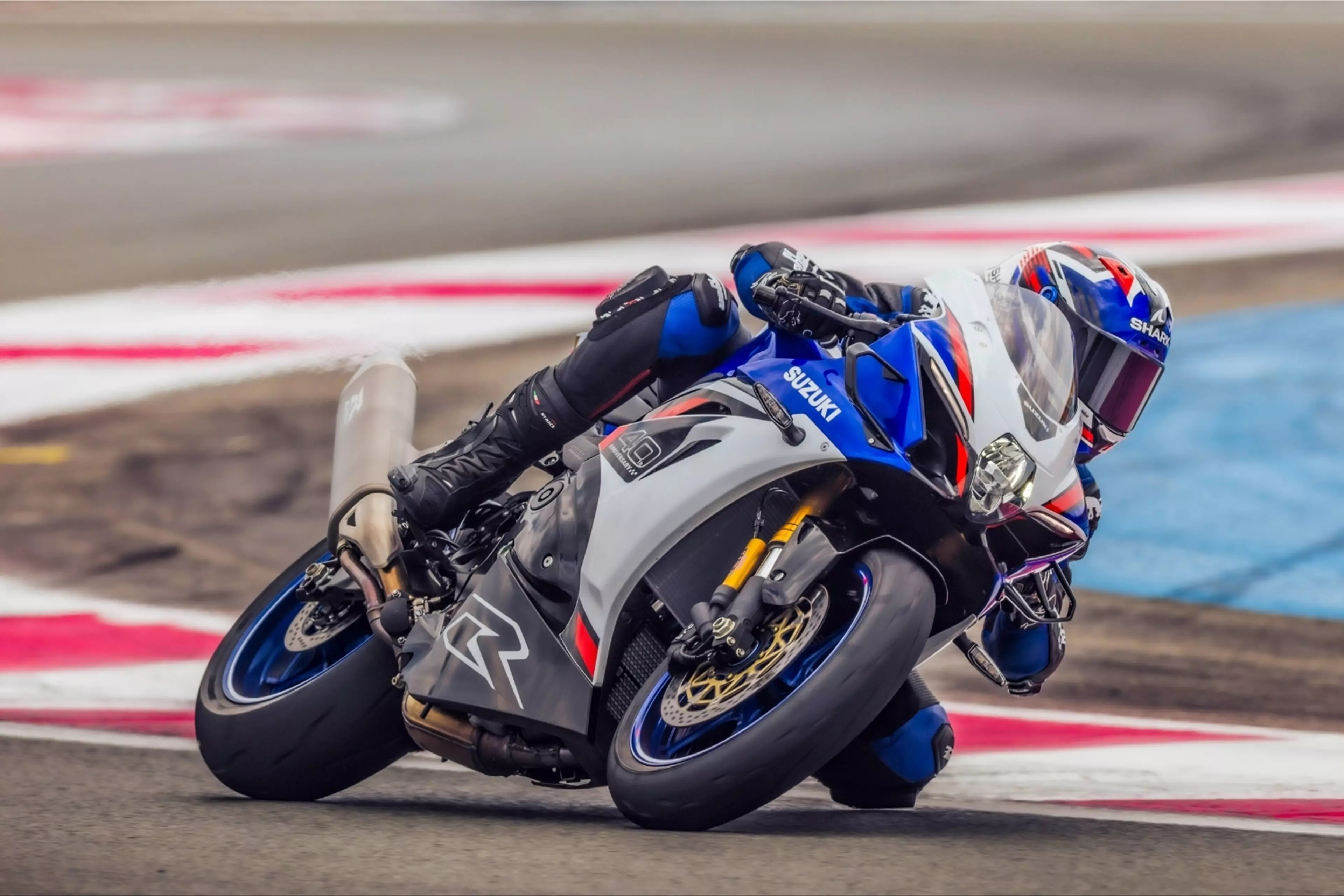
Suzuki has announced that the GSX-R1000R will return to the UK. Designed to perform, built to thrill, the GSX-R1000R gets an updated engine to meet Euro5+ regulations whilst maintaining high levels of performance output. Changes include a new crankshaft, crankcases, pistons, connecting rods, and a higher compression ratio. There’s also a new exhaust, an updated suite of electronics, and winglets that increase downforce at higher speeds.
Despite a number of changes made to satisfy the latest emissions standards, the updates to the engine also enhance the GSX-R1000R’s performance potential, making it capable of withstanding the tuning required to compete successfully in premier class endurance, superbike, and superstock racing competitions.
The announcement comes ahead of the prestigious Suzuka 8-Hour endurance racein Japan and the third round of the 2025 FIM Endurance World Championship, a championship that the GSX-R1000 has won 15 times since 2001. The announcement also comes as part of this year’s 40th anniversary celebrations of the GSX-R range, when the GSX-R750F changed the world of sportsbikes forever in 1985. As a result, the GSX-R1000R will come in a trio of colour schemes inspired by classic GSX-R liveries of the past, each adorned with a 40th anniversary logo on the fairing and fuel tank.
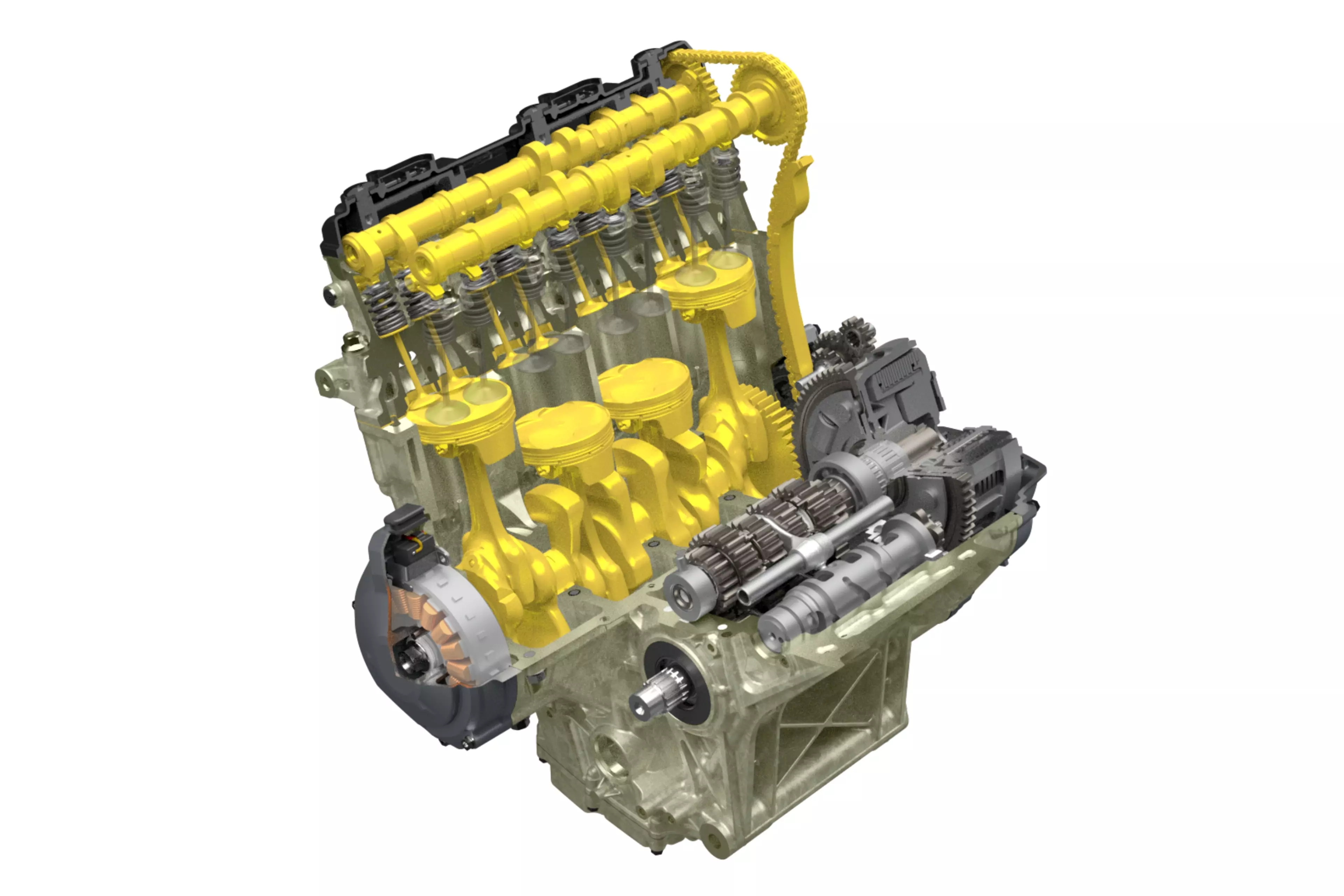
Engine
The GSX-R1000R’s 1000cc, inline four-cylinder engine still uses Suzuki’s MotoGP-developed variable valve timing system. Developed on the firm’s GSX-RR prototype racer, which won the 2020 MotoGP world championship, the mechanical system is built into the intake cam sprocket and an adjacent guide plate. It uses 12 steel balls and slanted grooves to rotate the sprocket and retard the intake valve timing at a pre-set rpm, boosting high-rpm power without sacrificing midrange and lower-rpm output. It also retains a finger follower valve train, though the shape of the fingers on both the intake and exhaust sides were changed and optimised to match the new cam profile. In addition, the exhaust valve diameter was changed from 24mm to 25mm, plus there are new camshafts and a wider cam chain. Maximum valve lift remains the same, with reduced overlap to help meet emissions targets.
There’s a new fuel pump to increase fuel pressure, and changes to the fuel injectors, with the secondary top feed injector changing from 10 to eight holes to contribute to cleaner emissions. To help maintain power output, new throttle bodies boast a larger bore; up to 48mm from 46mm, while air delivered to the throttle bodies travels through newly designed single-stage funnels, further boosting peak power.
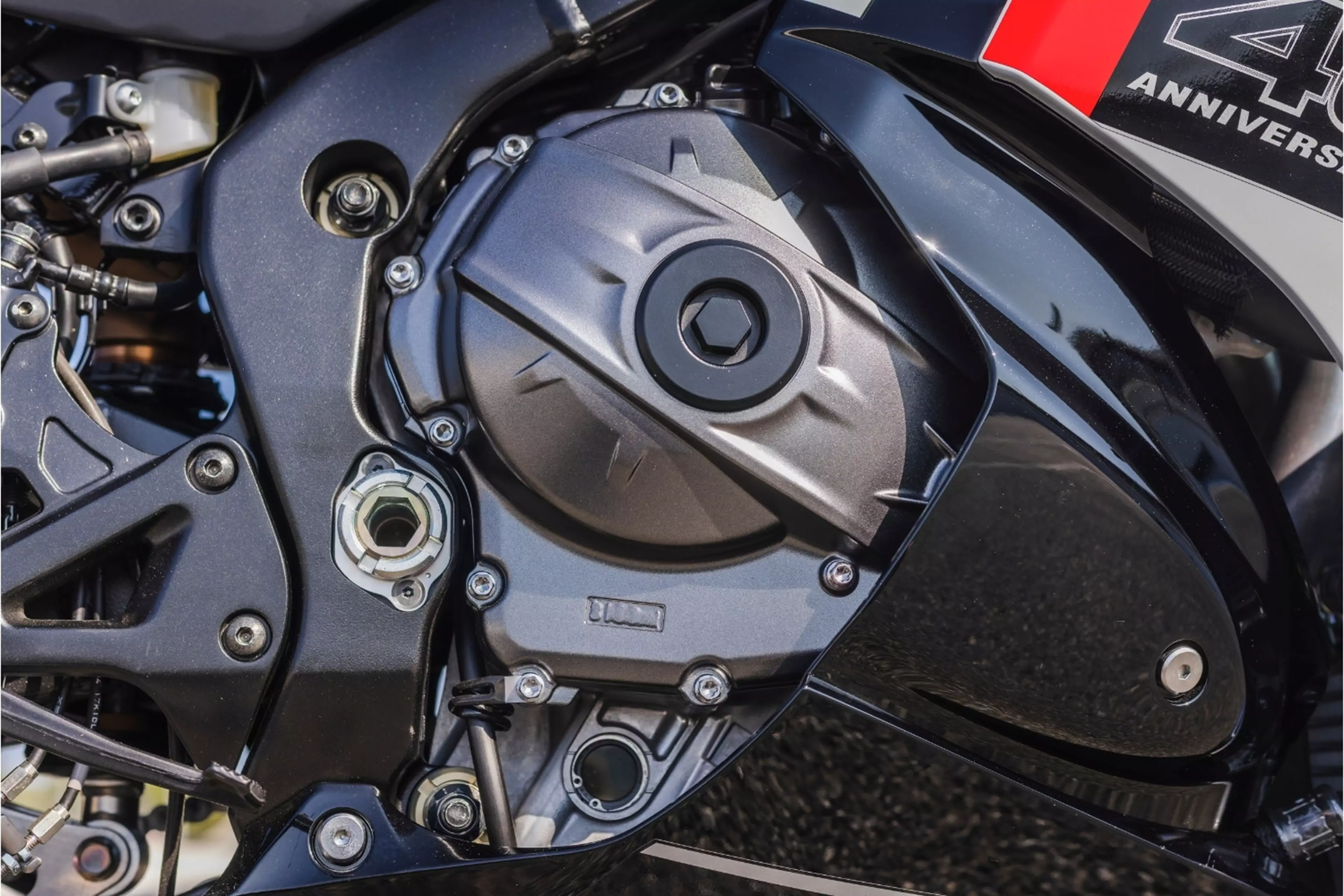
New, forged aluminium pistons have short skirts, cutaway sides and a short, DLC-coated wrist pin to reduce friction. The piston heads were reshaped to increase the compression ratio to 13.8:1 and accommodate the size of the increased exhaust valve diameter. The new pistons contribute to power output, reduced vibration, and durability.
The connecting rods are chrome-molybdenum steel with a carburised surface treatment to increase strength and are designed to enhance reliability when under higher levels of tune for racing.
The crankshaft adopts a new design with thicker journals, increased from 35mm to 37mm, designed to accommodate higher loads and withstand higher levels of tune in racing environments, plus new crankcases were designed in conjunction with the new crankshaft.
As well as being highly attractive and etched with a GSX-R logo, the new exhaust silencer body is more compact, reducing its capacity from 8.3 to 5.5 liters. A larger capacity elliptical catalytic converter in the collector is positioned closer to the engine to facilitate quicker warming, which helps improve its performance.
Peak power is 195PS at 13,200rpm, with peak torque 110.0Nm at 11,000rpm.
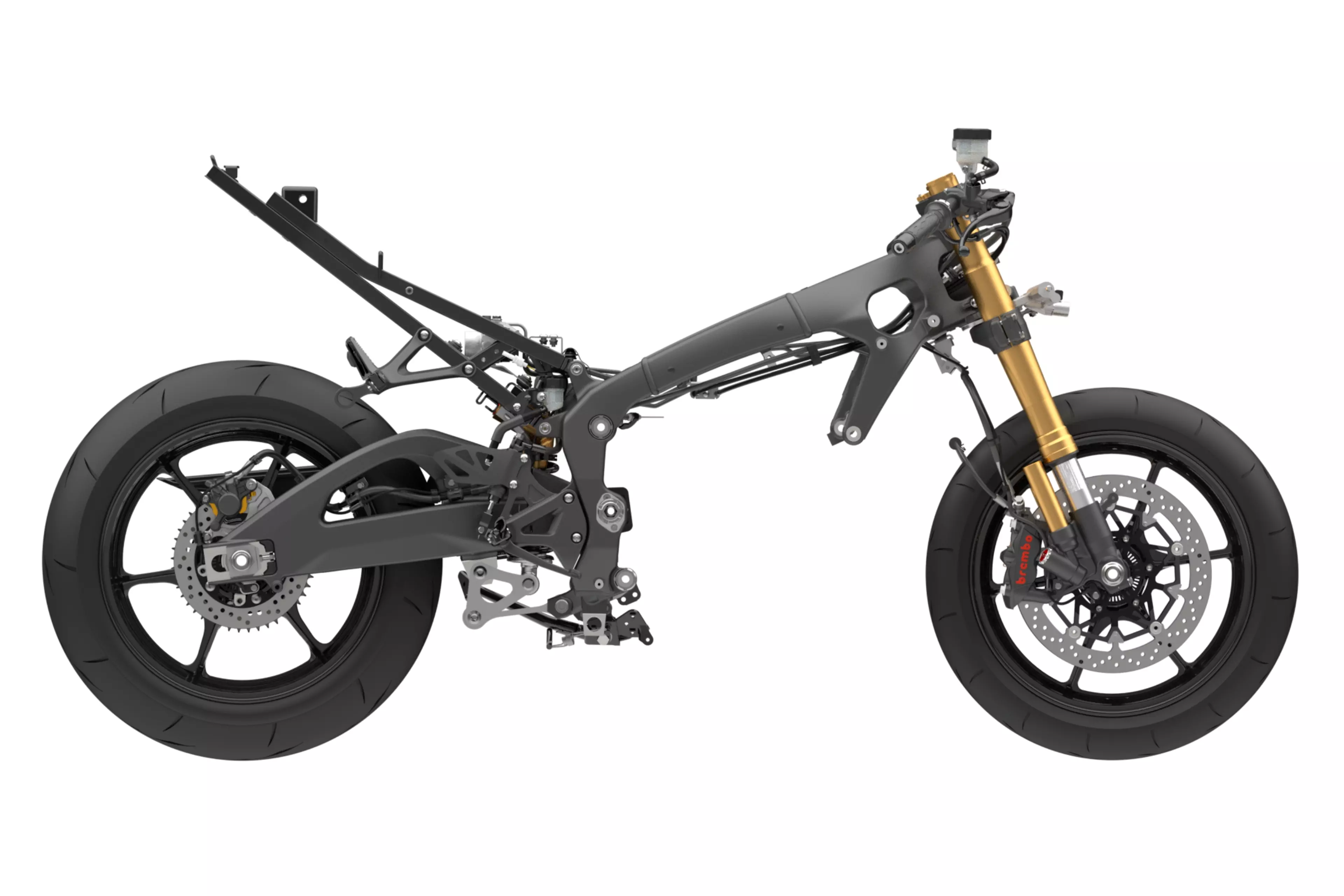
The new GSX-R1000R uses the same lightweight twin-spar aluminium frame, subframe, and braced aluminium swingarm as the previous version. Suspension comes courtesy of Showa, with its balance free front forks at the front, and a balance free rear shock at the rear, and there’s an electronically-controlled steering damper.
At the front, brakes are Brembo monoblock calipers, biting 320mm discs. At the rear sits a single caliper and 220m disc. There’s also a new ABS unit that saves 51 grams over the previous version GSX-R1000R. Lightweight cast aluminium wheels wear Bridgestone BATTLAX RACING STREET RS11 tyres: 120/70ZR17M/ at the front, 190/55ZR17M/C at the rear.
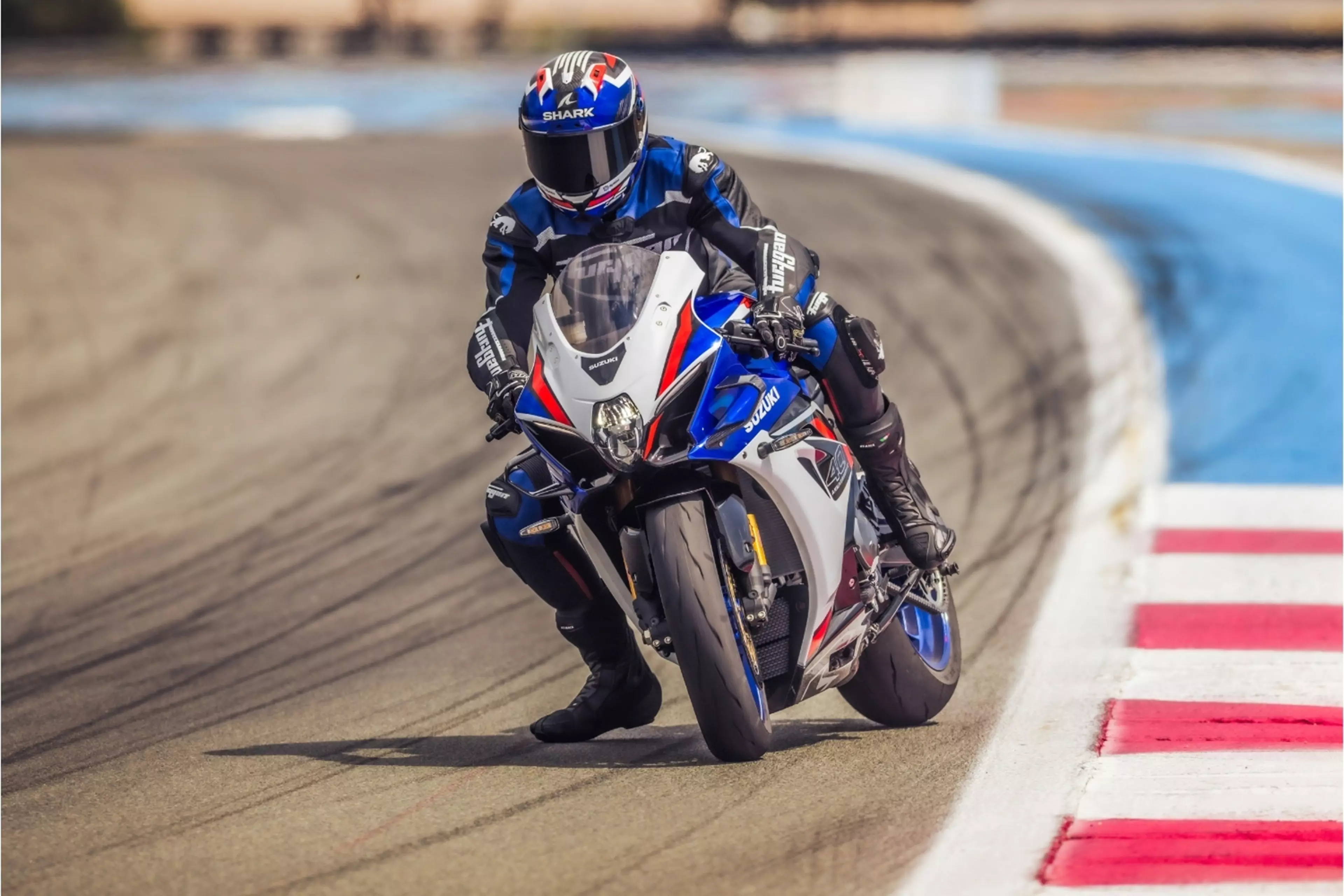
Developed in conjunction with the Suzuki CN Challenge race team, which contested the 2024 Suzuka 8-Hour with an experimental GSX-R1000R, new winglets provide increased downforce at higher speeds, aiding stability and reducing wheelie.
Produced in Japan, they are made of dry carbon with a hollow structure, and the size and shape of the winglets were developed through a long process of experimental builds and thorough test runs to achieve the optimum effect without making handling feel heavy.
Electronics
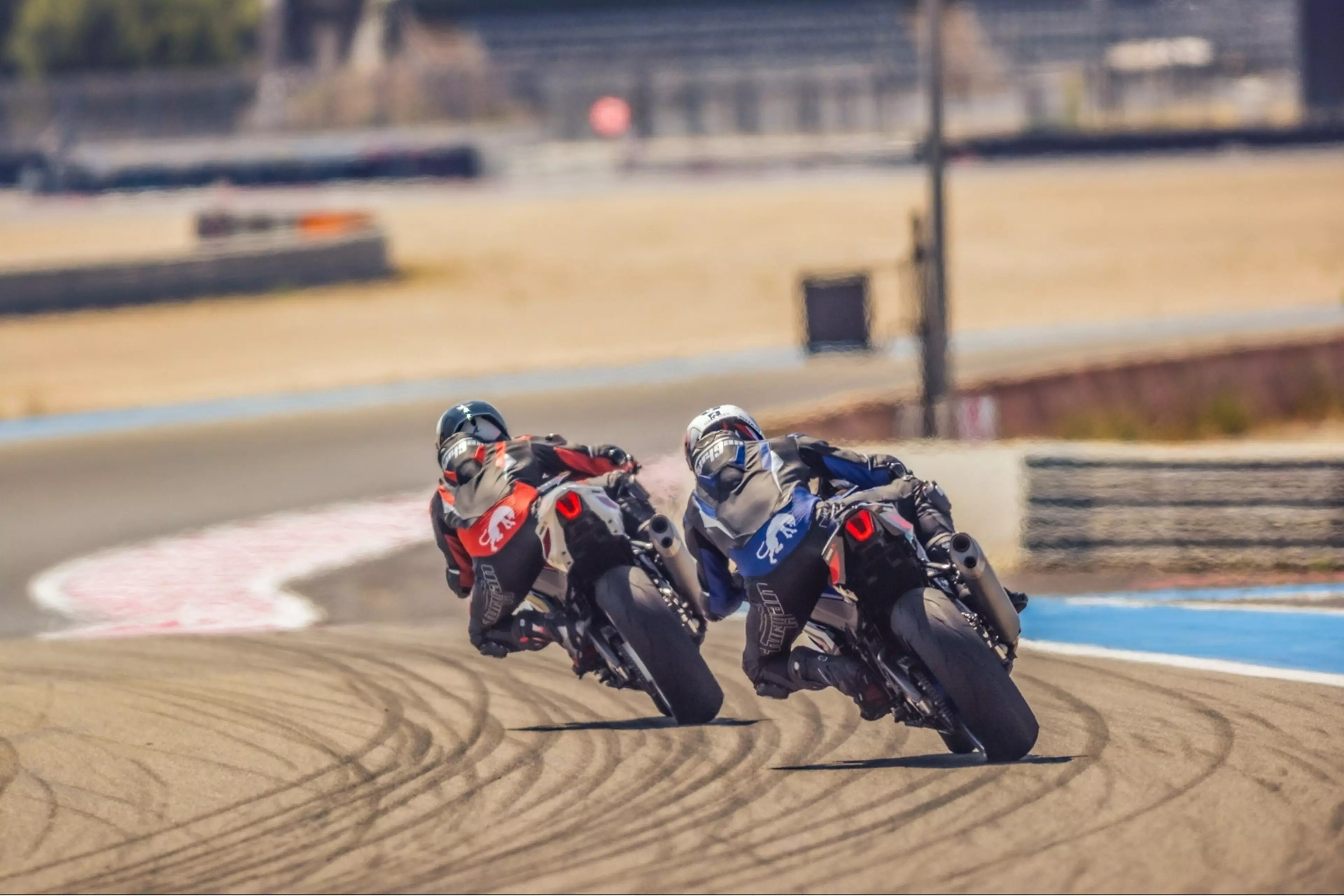
An updated suite of electronics further enhances the GSX-R1000R’s performance potential and allows riders to tailor its character to suit their preferences or riding conditions. Armed with a six direction IMU, the GSX-R1000R gets an updated traction control system that incorporates Suzuki’s new Roll Torque Control and anti-wheelie, with 10 modes to choose from plus the ability to disengage entirely.
Suzuki’s Roll Torque Control uses data from the IMU and wheel speed sensors to calculate the bike’s lean angle and speed to predetermine what level of power output is optimal. It works in conjunction with the traction control to deliver a sense of stability through the corner. Its benefit is that it works to prevent wheel spin, rather than activate when slip is detected, making for more seamless acceleration and the reduced cutting of power and ‘pumping’.
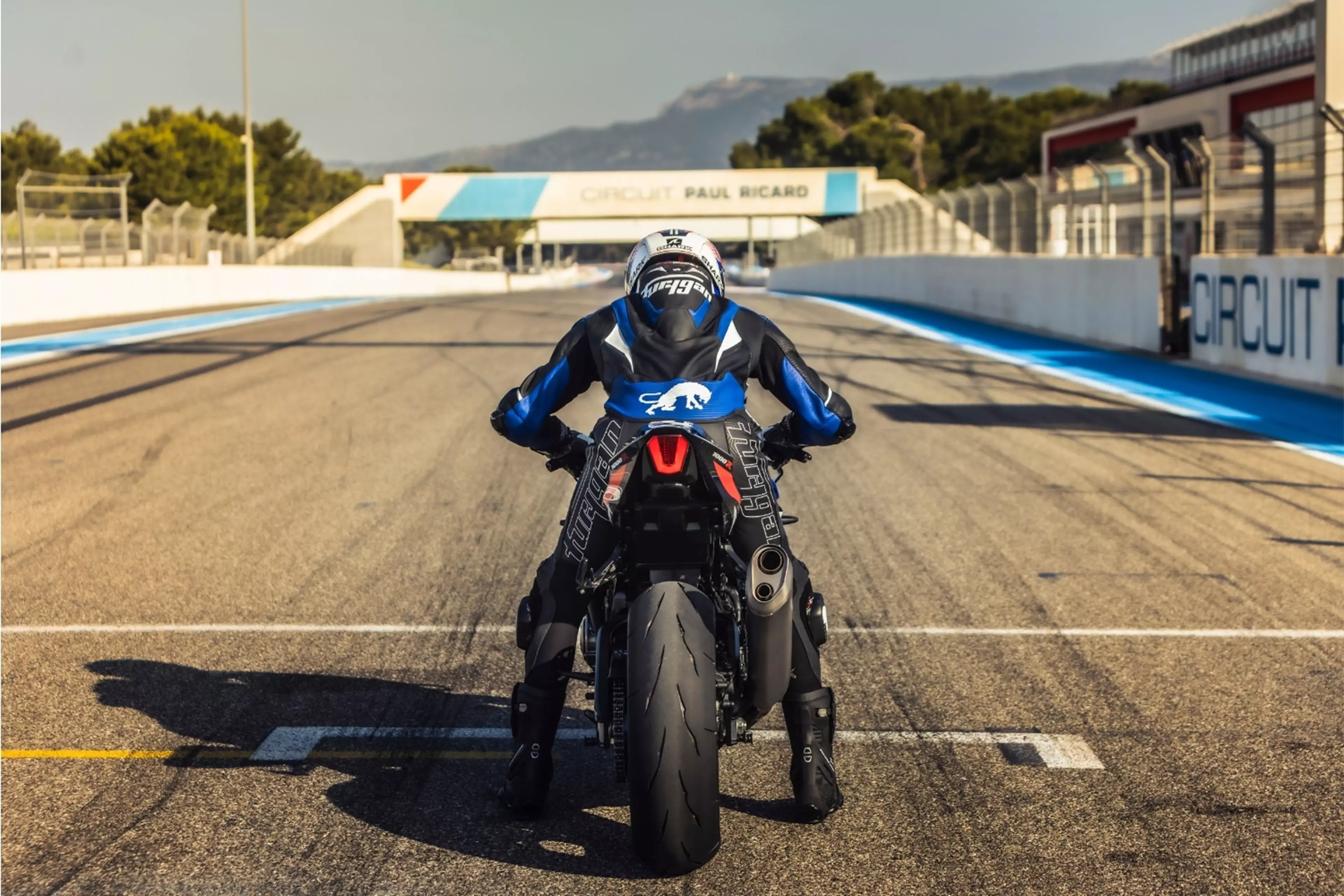
There’s a ride-by-wire throttle, bi-directional quickshifter, lean angle-sensitive ABS and slope-dependent control, launch control, low RPM assist, and Suzuki’s easy start function.
A new Li-ion HY battEliiy P-series starter battery is more compact and lightweight, and is designed with a focus on exceptional reliability, durability, enhanced startability, and an extended lifespan.
Headlights, positioning lights, and taillights are full LED.
Styling
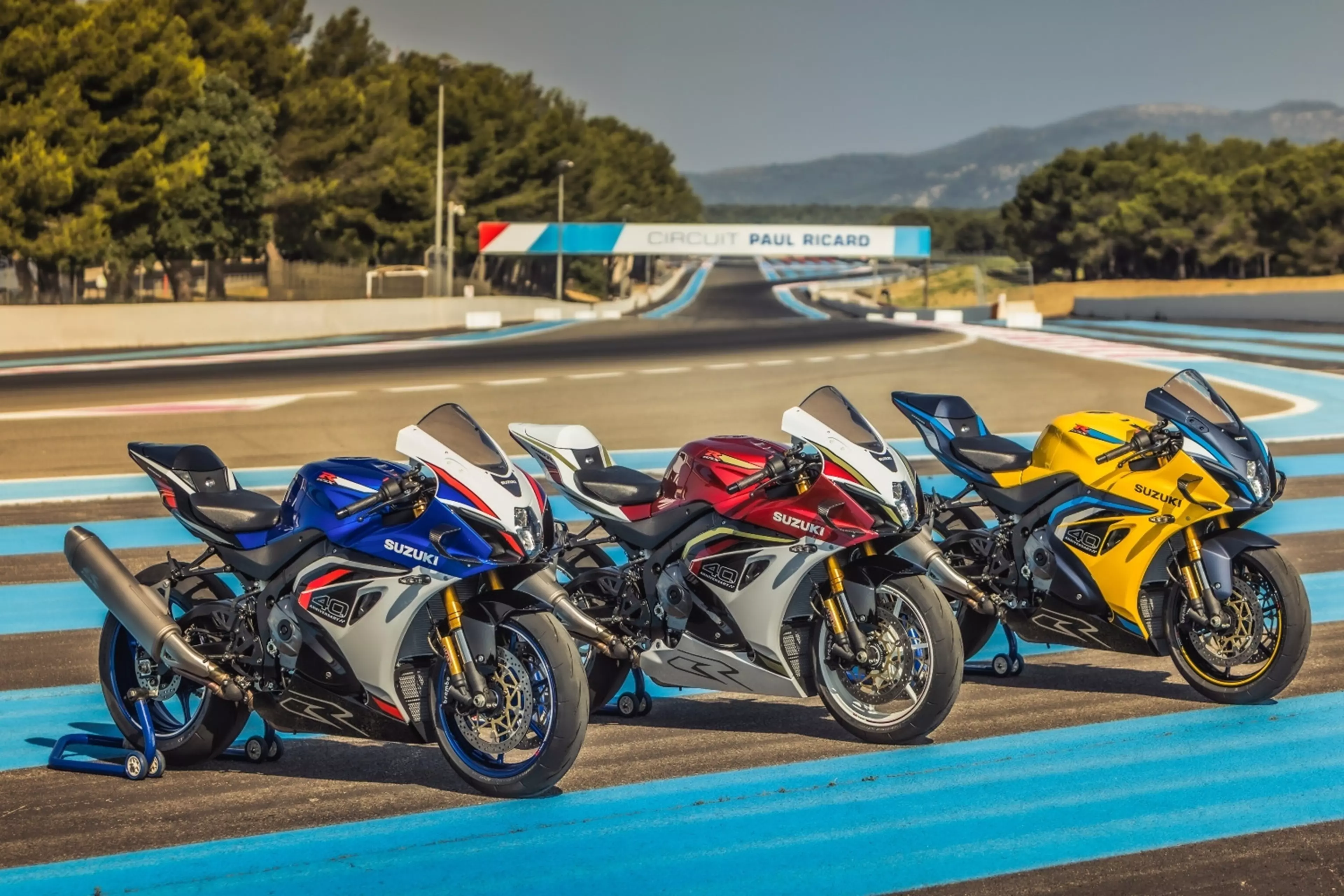
Three new colour schemes pay homage to classic GSX-R liveries of old, with a classic blue and white take joined by a red and white version and a yellow and matt blue option. Each features a 40th anniversary decal on the fairing and the fuel tank. A retro ‘R’ logo adorns the bellypan of all three. There are also GSX-R logos on the seat and exhaust silencer, and the magneto and clutch covers are finished in grey.
Pricing and availability
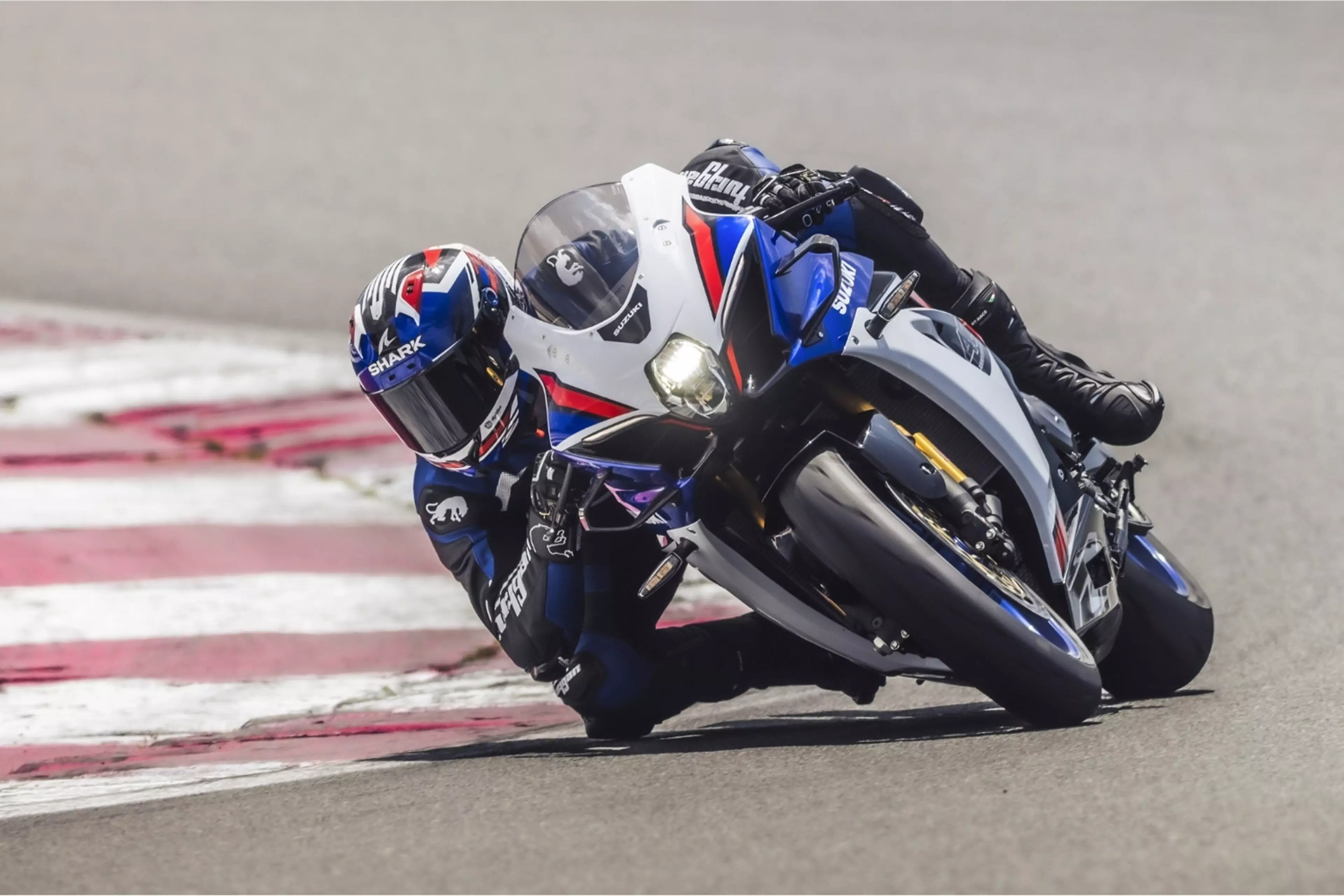
The GSX-R1000R will arrive in UK dealerships in the spring of 2026, with pricing to be announced in due course. It will be on display at MCL at the NEC in November.